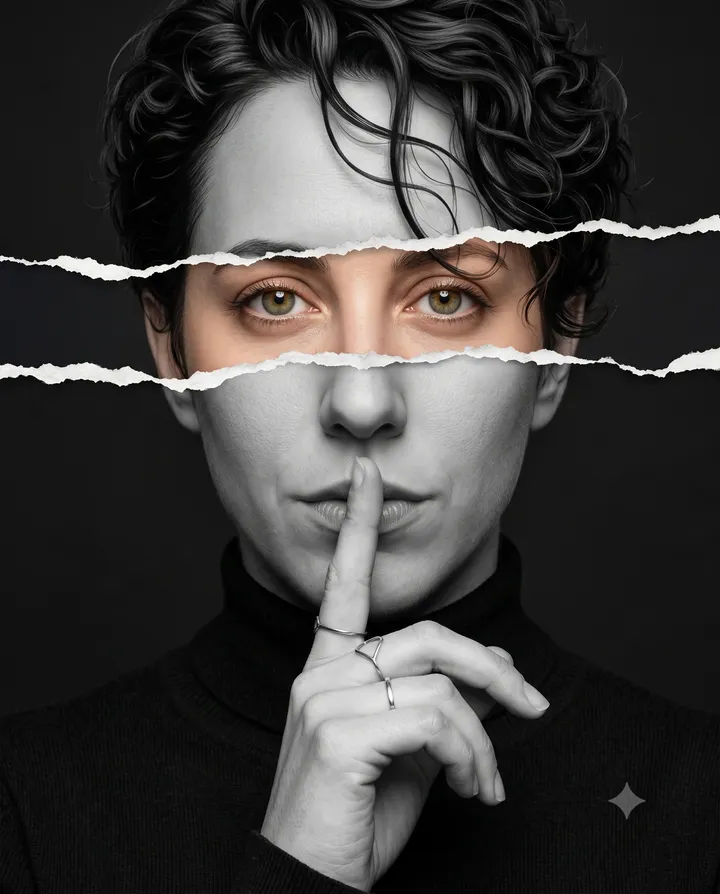
SELECTIVE-COLOR “SHH” TORN-PAPER PORTRAIT
Category: Portraits | Optimized For: Google Gemini | Aspect Ratio: 4:5
Copy-Paste AI Photo Editing Prompt
Use the uploaded identity image as the exact facial and physical reference for the adult woman. Preserve her recognizable facial structure, eye shape and natural color, eyebrows, nose, lips, jawline, cheek structure, skin tone, hairstyle, hair color, hairline, apparent age, hand characteristics, and natural proportions. Preserve natural asymmetry and realistic skin texture. Do not replace, redesign, age, de-age, or excessively beautify her face.

Use the supplied composition reference only for the direct gaze, finger-to-lips gesture, horizontal torn-paper bands, selective-color treatment, dark clothing, and close-up framing. Do not copy any visible person, identity, jewelry, paper-tear pattern, typography, watermark, border, or exact graphic layout from the reference.

Create an ultra-realistic conceptual portrait collage of the uploaded adult woman making a quiet “shh” gesture. Keep the subject clearly recognizable across every monochrome and color layer.

FACE, HAIR, AND EXPRESSION
Give her an intense but calm expression with direct eye contact. Preserve her natural eye color rather than replacing it with a generic hazel-brown tone. Enhance only the authentic iris detail and warm reflections already compatible with the uploaded identity.

Style her hair in loose, slightly damp-looking strands falling naturally around the forehead, temples, cheeks, and shoulders. Preserve the uploaded subject’s original hair color, texture, hairline, and recognizable characteristics. Avoid changing the hair into an unrelated style.

Dress her in a plain black high-neck sweater or dark knit garment with soft, realistic fabric texture. Keep the clothing minimal, original, and free from logos, text, patches, or recognizable design details.

“SHH” HAND GESTURE
Frame the portrait tightly from the upper chest to slightly above the head. Center her face precisely in the composition.

Raise one hand vertically in front of her chin and place the index finger gently against the center of her closed lips, forming a clear and natural “shh” gesture. The fingertip should make light contact without entering the mouth, covering the nose, or distorting the lips.

Show the remaining fingers curled naturally beneath the chin. Render one thumb and four fingers with realistic joints, nails, knuckles, tendons, and skin creases.

Add two or three thin silver-colored rings featuring simple original geometric forms. Keep the rings physically separate and naturally positioned around the fingers. Do not reproduce recognizable jewelry branding or signature designs.

MONOCHROME BASE PORTRAIT
Render the main portrait in rich black and white. Use deep black hair and clothing, smooth grayscale skin tones, luminous silver highlights, and soft controlled shadows across the cheeks, nose, lips, hand, neck, and sweater.

Keep facial skin realistic, with pores, fine hairs, natural lines, and subtle tonal variation. Avoid artificial smoothing, plastic skin, or excessive contrast that removes identity-defining details.

SELECTIVE-COLOR EYE STRIP
Create one wide horizontal torn-paper opening extending from the left edge to the right edge of the composition. Position it across the central face so it reveals both eyes, both eyebrows, the bridge of the nose, and part of the upper cheeks in full natural color.

Inside this opening, show the uploaded subject’s authentic skin tone, natural iris color, subtle warm eye reflections, eyelashes, eyebrow hairs, and realistic facial texture. Keep the color refined and photographic rather than oversaturated.

Align the colored eye strip perfectly with the monochrome portions above and below it. It must depict the same face, expression, gaze, camera position, focal length, lighting direction, and scale—not a second portrait.

Do not duplicate the pupils, eyebrows, nose bridge, or facial contours. The colored strip must function as a precise revealed layer of the same underlying photograph.

TORN-PAPER STRUCTURE
Add a narrower torn-paper edge immediately above the colored eye strip and another irregular torn edge below it. Render realistic white paper fibers, uneven hand-torn contours, curled fragments, tiny contact shadows, physical thickness, and subtle printed-photo texture.

Make the paper appear layered over and peeled away from a single portrait. Keep the torn edges away from the pupils so both eyes remain completely visible. Do not let paper fragments cross the irises, eyelashes, fingertip, or essential facial landmarks.

Create a new original tear arrangement rather than copying the precise shape of the reference. Keep the bands broadly horizontal while allowing natural asymmetry and handmade imperfections.

LIGHTING AND BACKGROUND
Use a deep charcoal or pure-black studio background. Add soft frontal key light across the eyes, nose, lips, cheekbones, and raised finger. Use subtle side shadows for facial depth and a faint rim light to separate loose hair strands from the background.

Keep the eyes, irises, lips, fingertip, rings, and nearest torn-paper fibers sharply focused. Allow the lower hand, sweater, and outer hair to soften gradually toward the bottom and side edges. Add subtle photographic grain and restrained paper texture.

The final artwork should communicate secrecy, silence, hidden truth, selective perception, privacy, mystery, and the contrast between an outward monochrome identity and an inner world revealed through color.

Professional 100mm portrait-lens aesthetic combined with handmade photo-collage compositing, centered close-up, shallow depth of field, realistic skin and hair, precise layer alignment, high dynamic range, premium monochrome grading with selective natural color, and Ultra-HD 8K quality.

Strong identity fidelity to the uploaded image; exactly one consistent adult identity across all layers; no identity drift, face replacement, facial redesign, celebrity transformation, minors, duplicated eyes, extra pupils, misaligned facial layers, extra mouths or noses, malformed hands, missing or extra fingers, finger entering the mouth, lips distorted by pressure, paper covering the pupils, random color outside the eye strip, branded jewelry, text overlay, logos, watermark, poster border, or application-interface elements. Vertical 4:5 aspect ratio.
How to Use This Prompt in Google Gemini & ChatGPT
- Copy the exact prompt formula above.
- Open Google Gemini (Nano Banana Pro) or ChatGPT Vision and upload your reference portrait if required.
- Paste the prompt and adjust subject clothing or lighting details as desired.